Research Overview
Epithelial cells form barriers that separate body compartments from one another and the external environment. They undergo dynamic remodeling to execute cell behaviors that facilitate normal development, tumor formation, and metastasis. The West lab studies how epithelial barrier function is disrupted during epithelial remodeling, and how barrier breakdown contributes to invasive behaviors during developmental processes, cancer progression, and metastasis.
Claudin Proteins and Epithelial Remodeling
Claudins are transmembrane proteins that comprise the tight junction, and are critical for establishing cell-cell adhesion and epithelial barrier function. Mammals express over 20 different Claudins, with diverse expression profiles in different tissues. Expression of these proteins is frequently disrupted during cancer progression, yet we know little about how this contributes to tumor progression and metastasis. Current projects in the lab are focused on studying how Claudin expression becomes mis regulated during tumorigenesis, and the resulting impacts on tumor progression and metastasis. We work across scales – from the cellular and molecular scale, to the tissue and organ scale, all the way up to the inter-organ and organismal scale.

Our Approach
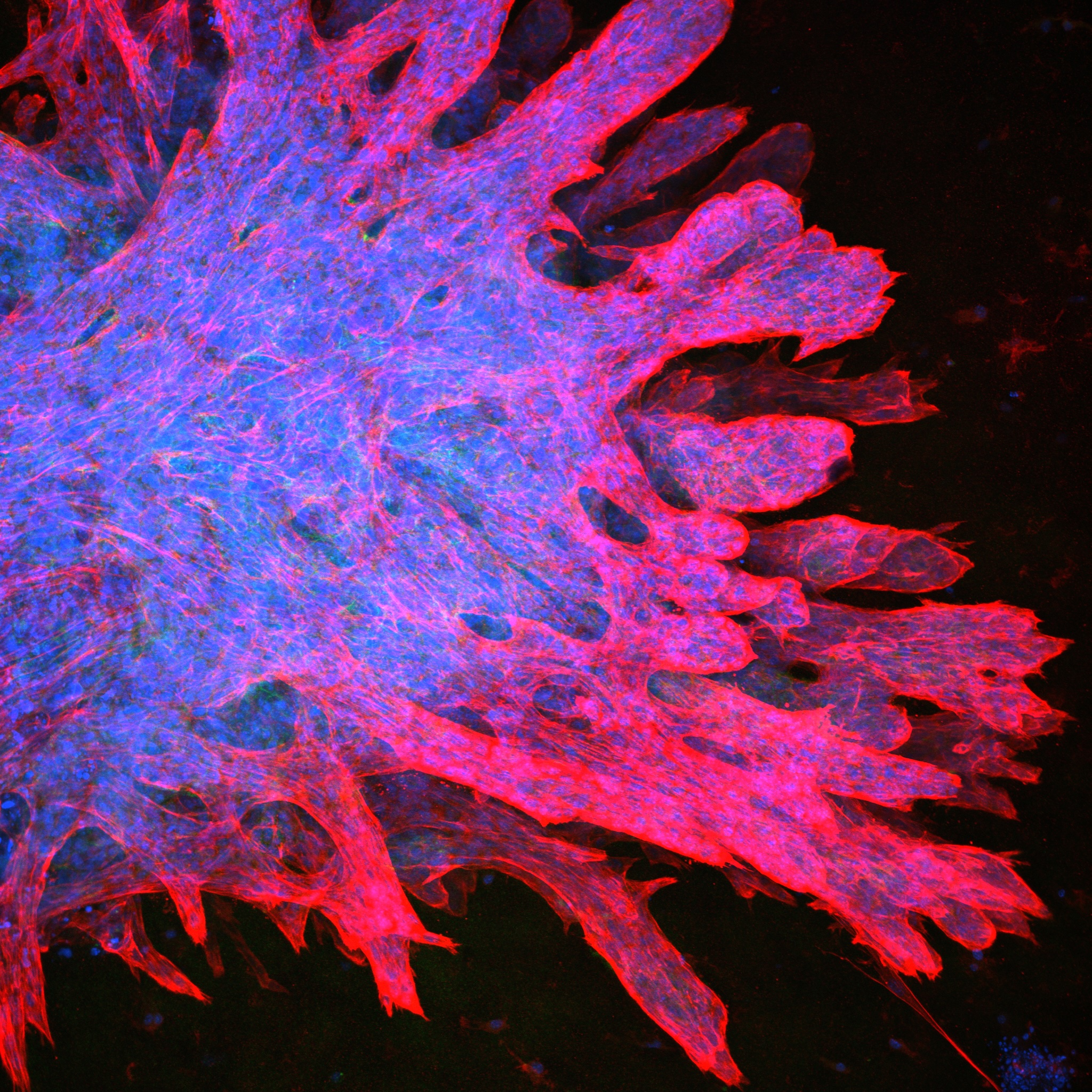
To study epithelial remodeling, we combine mouse genetics, genetically engineered mouse models of cancer, human cancer models, 3D organoid culture, confocal microscopy, transcriptomic, and conventional cell and molecular biology approaches.
 West Lab